

AI decision layer for robots
The judgment layer for every robot.
Sixth Sense sits on top of your robots. It decides what to do with every item, acts when its confidence is high, asks an operator when it is not, and records each decision.
-
Item: Vial batch 2231
Action: Route to line B
96%State: Acted -
Item: Carton, torn seal
Action: Hold for check
72%State: Asked operator -
Item: Tray 18, 12 units
Action: Pick and place
93%State: Acted -
Item: Unlabelled bag
Action: Stop conveyor
41%State: Blocked -
Item: Sample kit 0417
Action: Pass to packing
98%State: Acted -
Item: Crate, new supplier
Action: Hold for check
79%State: Asked operator
Illustrative example. Not live data.
The problem
Robots are affordable. Exceptions are not.
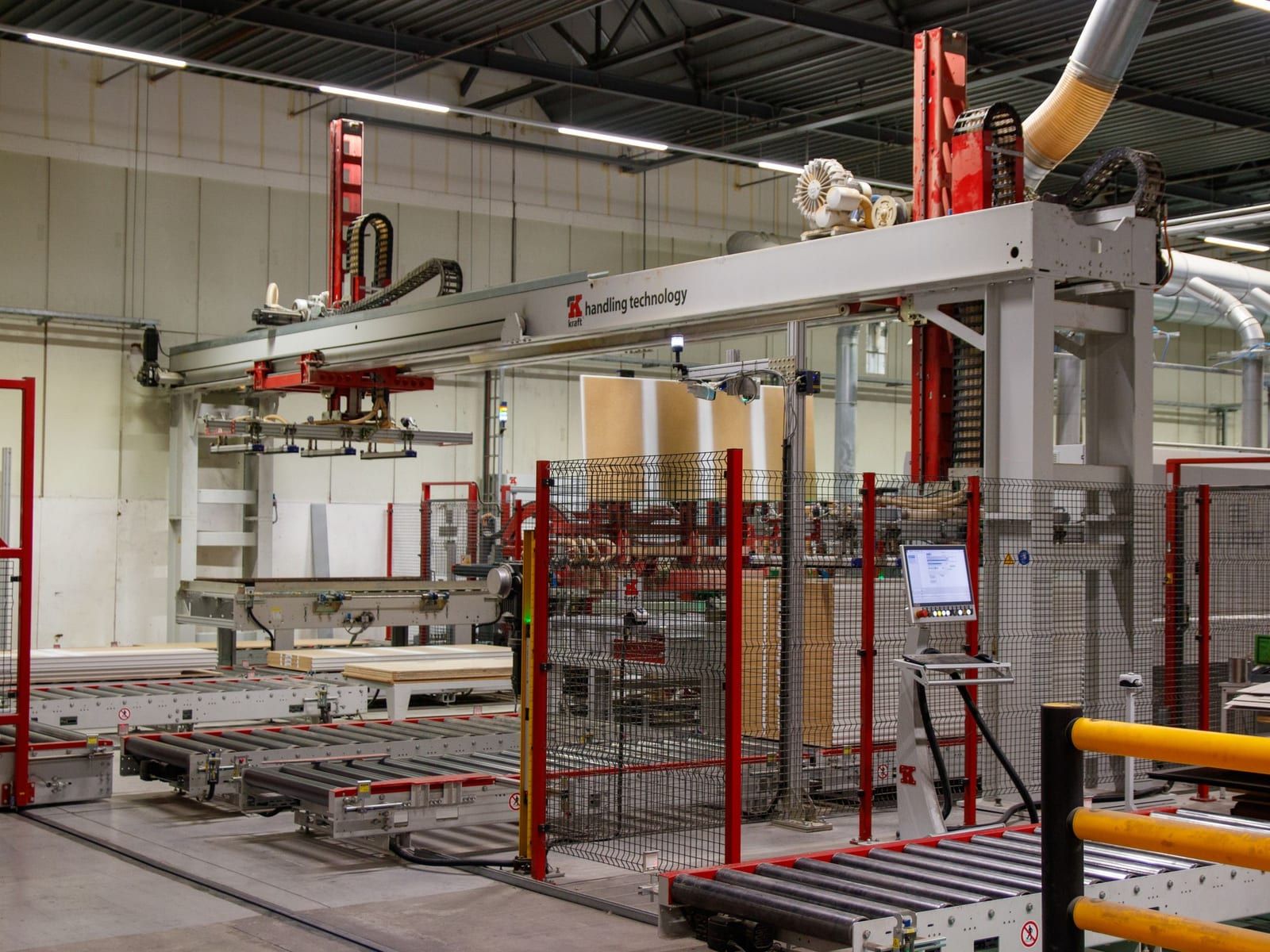
A robot arm costs less than a car. Yet most of them stop at the first item that does not match the script: a torn label, a new packaging, a product that arrived a day early.
Every new product, every new rule, means another round of reprogramming. The integrator is booked, the line waits, and the business case slips.
-
Stops at the first exception
Anything outside the programmed cases halts the line or needs a person to step in.
-
Every change is a project
New products and new rules go back to the integrator for reprogramming.
-
No record of why
When something goes wrong, nobody can show what the robot saw and why it acted.
How it works
Perceive, decide, act or ask, record.
Four steps, on every item, every time. The same loop runs on any robot brand and on any model you choose.
-
01
Perceive
Camera and sensor data become structured facts about the scene: what the item is, its state, where it sits.
-
02
Decide
The model picks an action and attaches a confidence score to it.
-
03
Act or ask
Above the threshold the robot acts. Below it, an operator gets the case on a tablet and decides.
-
04
Record
Every decision is logged with its confidence, the action taken and who approved it.
Confidence meter
Each decision carries a score. You set the threshold per task. Above it the robot acts, below it a person is asked. Move the threshold and watch the outcomes change.
Below 50 percent the action is blocked whatever the threshold.
- Vial batch 2231 Acted 96%
- Sample kit 0417 Acted 89%
- Carton, torn seal Asked operator 72%
- Crate, new supplier Asked operator 58%
- Unlabelled bag Blocked 41%
Acted: 2 · Asked operator: 2 · Blocked: 1
Illustrative example. In production the threshold is set per task, and a safety rule can block any action whatever the score.
Product demo
See it decide.
Two minutes in a simulated pharma cell. Routine boxes flow, a crushed box is blocked, an operator answers on a tablet, a rule changes in plain words, and every decision lands in the audit log.
What happens in the video
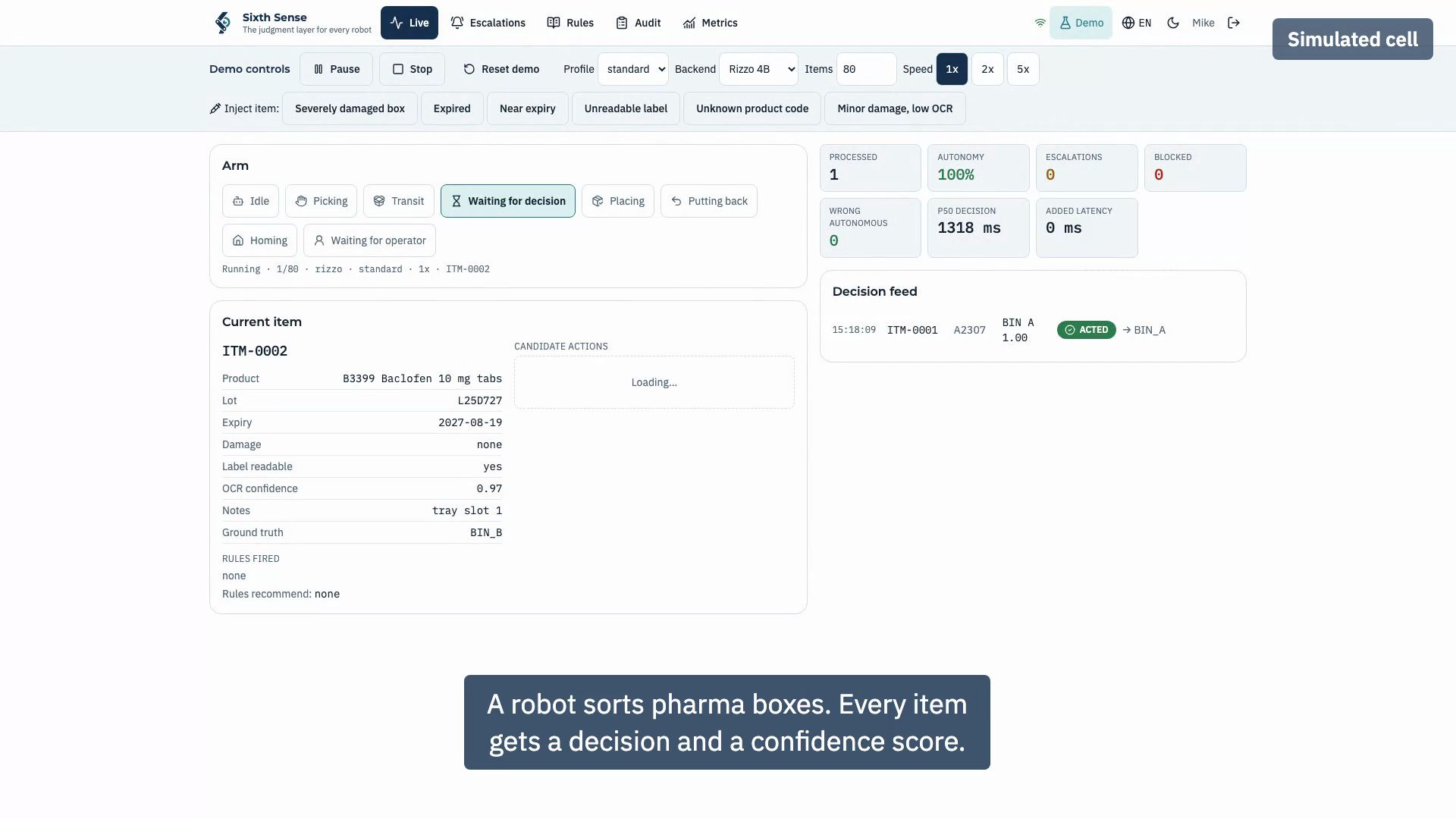
- A robot sorts pharma boxes. Every item gets a decision and a confidence score. Above the threshold, it acts on its own.
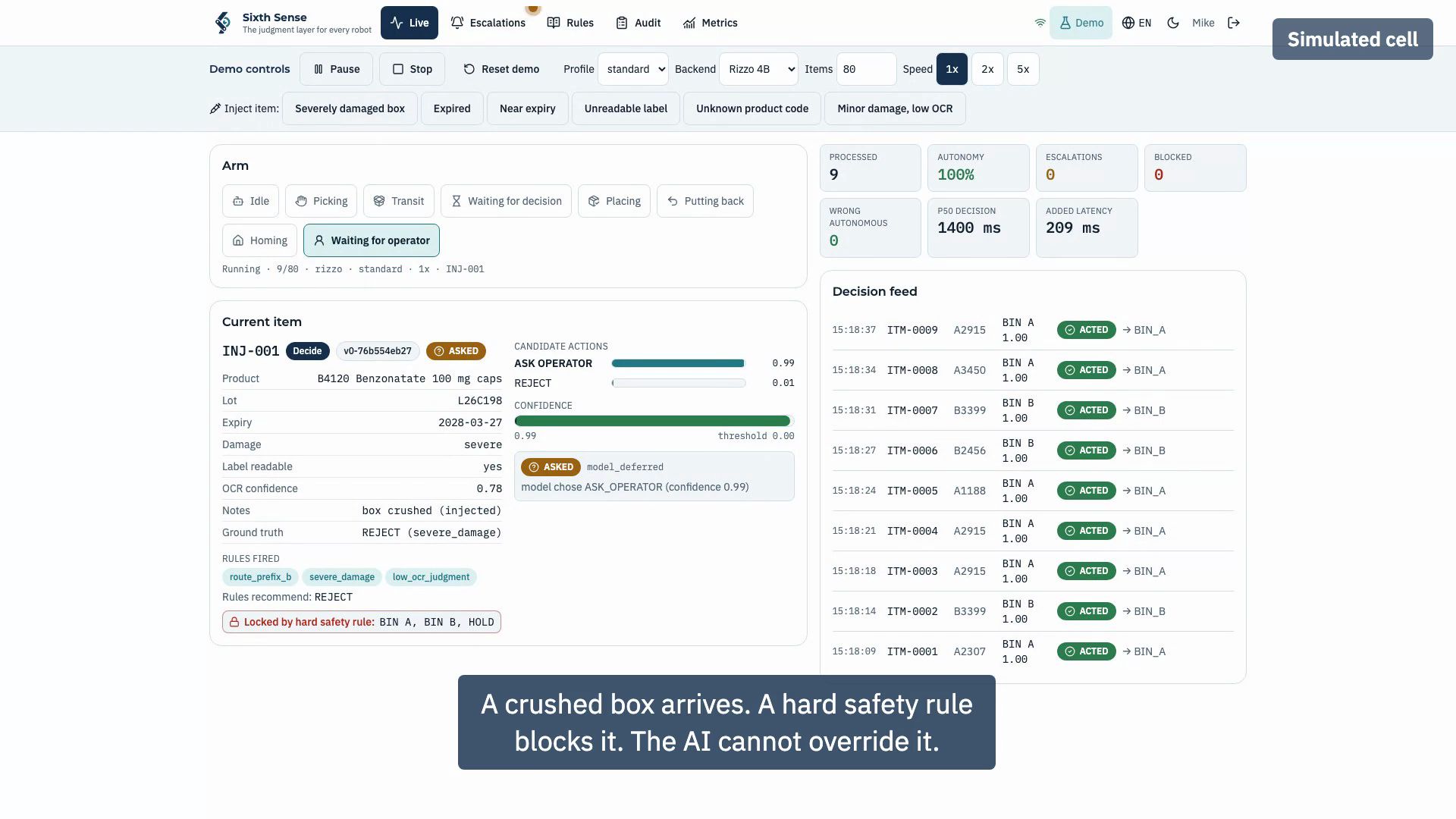
- A crushed box arrives. A hard safety rule blocks it. The AI cannot override it.
- A label is unreadable. The robot is not sure, so it asks. The operator decides on a tablet, choosing only among safe options.
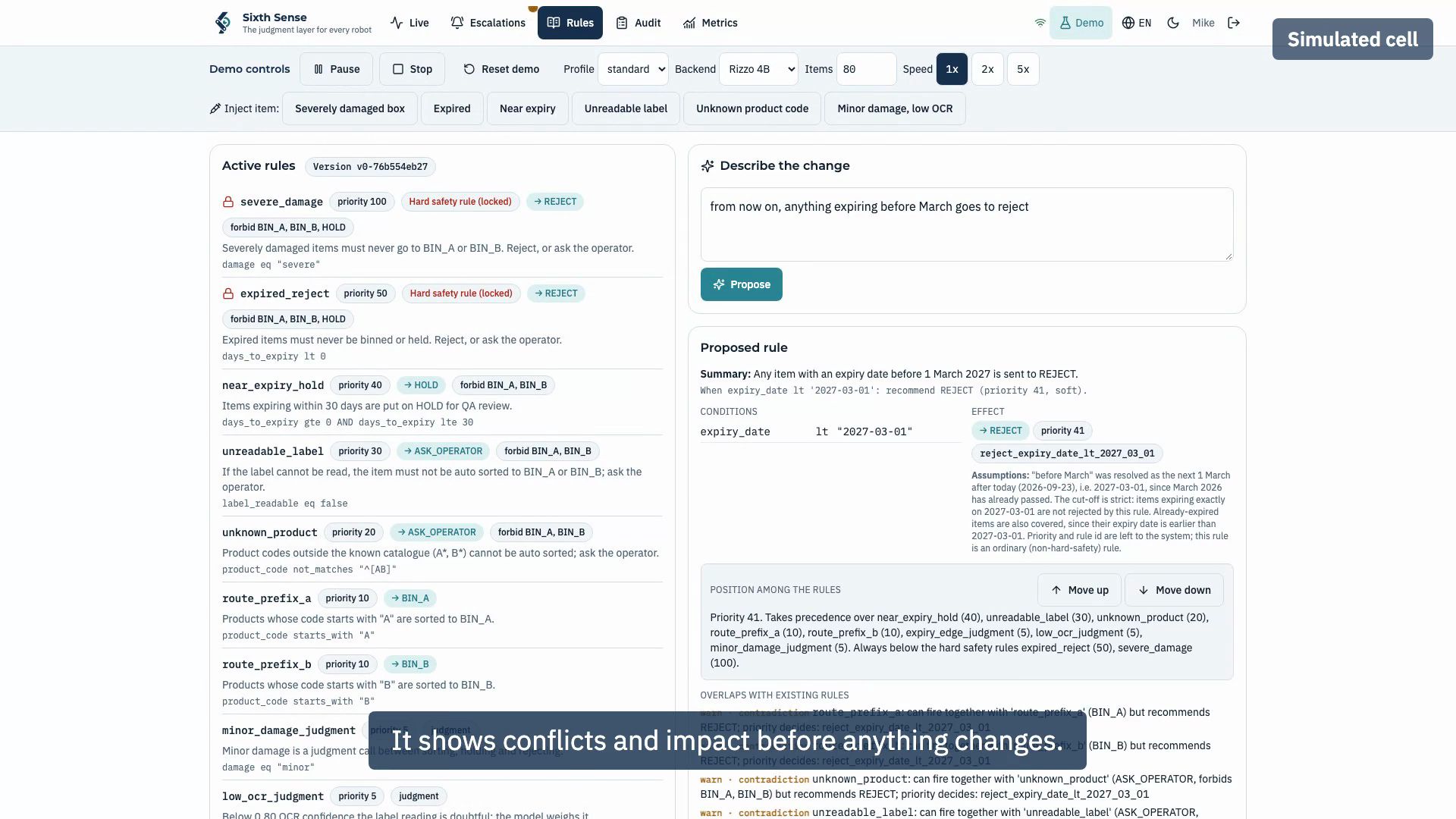
- A new rule is written in plain words. The console shows conflicts and impact before anything changes. Once confirmed, the next expiring box goes straight to reject.
- Every decision is recorded: what it saw, why it acted, who approved. Everything runs on premise.
The operator console
-
Live
The arm state, the current item with its facts, the candidate actions with their probabilities, and the decision feed.
-
Escalations
The question to the operator: image, reason and only the actions the rules allow. Options locked by a hard rule stay disabled.
-
Rules
A sentence becomes a structured rule. Priority, overlaps with existing rules and the impact on recent items are shown before confirmation.
-
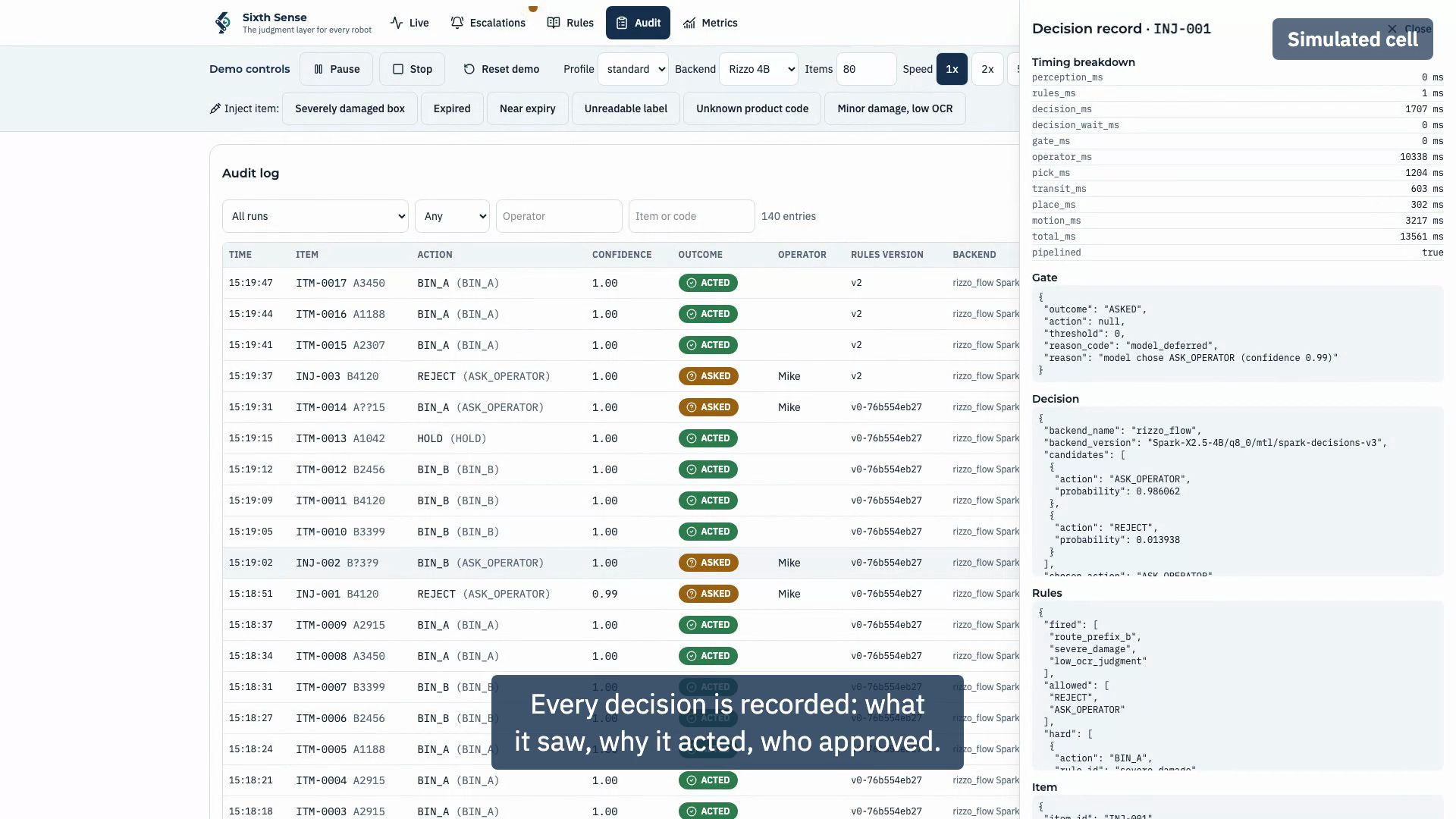
Audit
One record per decision: timing, gate outcome, rules fired, model version and who approved.
Technology
Fast decisions, hard limits.
Sixth Sense uses a new class of AI decision models. They do not write text: they choose between the actions the rules allow and return a calibrated probability for each, in a fraction of a second.
Deployment
- On premise compute (Apple Silicon or NVIDIA)
- Existing cameras
- Robot controller integration
- Tablet console
- Audit export (CSV/JSON)
- ROS 2 integration Roadmap
- Additional robot brands Roadmap
- Fleet dashboard Roadmap
Read the diagram as text
- Cameras and sensors feed the perception module, which turns the scene into structured facts.
- The rule engine takes those facts and produces the list of allowed actions. Hard safety rules are applied here, in deterministic code.
- The decision model picks one of the allowed actions and returns a confidence for it.
- The confidence gate compares that confidence with the threshold set for the task.
- Above the threshold, the robot controller runs the action.
- Below the threshold, the case goes to the operator console on a tablet. The operator decides, and the controller runs that decision.
- Every step writes to the audit log.
The model
System One models
Sixth Sense runs on System One models, a new generation of AI models built for one job: choosing. The name comes from the fast, intuitive mode of human thinking, the one that recognises a situation and acts on it without deliberating in words.
A System One model takes the structured facts from perception and the list of actions the rules allow. It returns one choice and a calibrated confidence for it. It does not generate text, plan or reason step by step, and it never proposes an action outside the list.
Because the output is a probability, not a sentence, it can be measured, thresholded and audited. Below the threshold the model does not act at all. A person does.
- Chooses, does not write
- The output is one action from the allowed list and a confidence score. No free text.
- Calibrated confidence
- A score of 90 percent should be right about nine times in ten. We check that against your decision log.
- Small and fast
- Answers in a fraction of a second on a small box on site. No data centre needed.
- Swappable
- Any model that returns a choice and a confidence can take its place. Sixth Sense is not tied to one vendor.
-
Safety lives in code
Hard rules are deterministic code. The model can never override them.
-
The model only chooses
It picks from the actions the rules allow. It never invents new ones.
-
On premise
Runs on a small box on your site. No data leaves your network.
-
Swap anything
Any decision model, any robot brand, any camera.
Plain language rules
Change the rules without reprogramming.
An operator types what should change. Sixth Sense turns it into a structured rule and waits for confirmation before it applies.
- Rules are versioned. You can see who changed what and when.
- A rule never applies before a person confirms it.
- No code, no downtime, no ticket to the integrator.
Operator console
Illustrative example
New rule
Structured rule
- Condition
- expiry_date < 1 March
- Action
- Reject
- Scope
- All items, all lines
- Applies
- From confirmation
Use cases
Where variety beats volume.
Sixth Sense fits work where items change often and every exception costs time.
-
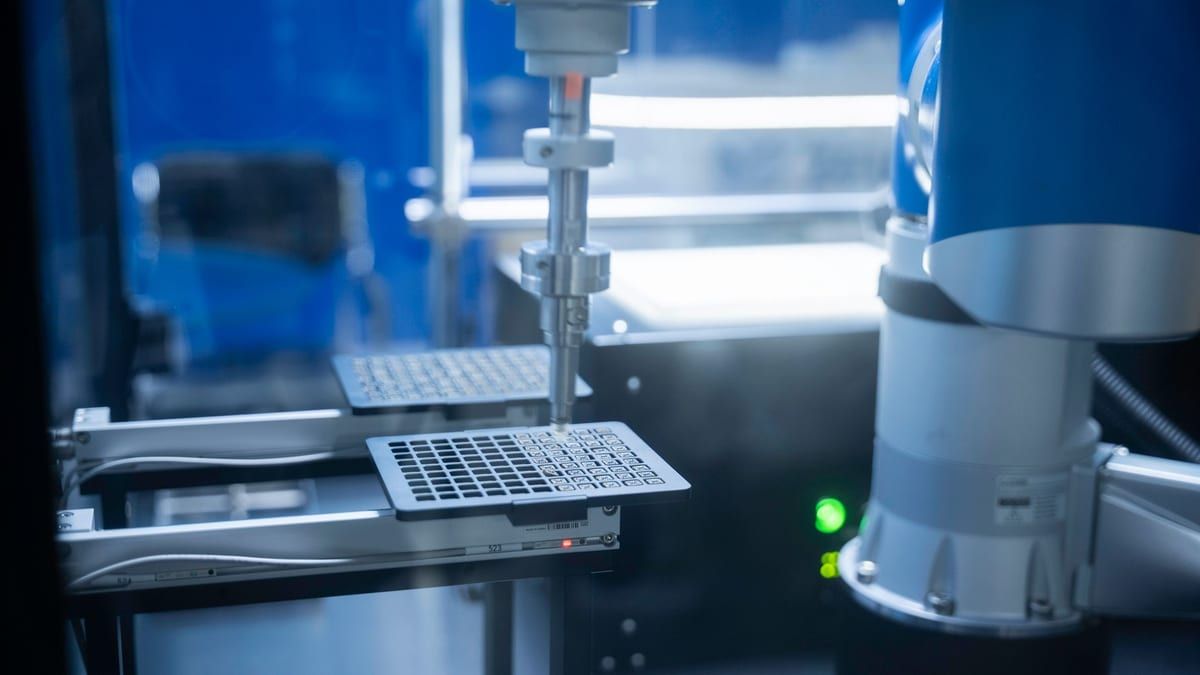
Pharma and labs
- The problem
- Samples and vials vary by batch, and every handling step must be traceable.
- With Sixth Sense
- Sixth Sense checks each item, asks when unsure and keeps an audit trail for every decision.
-
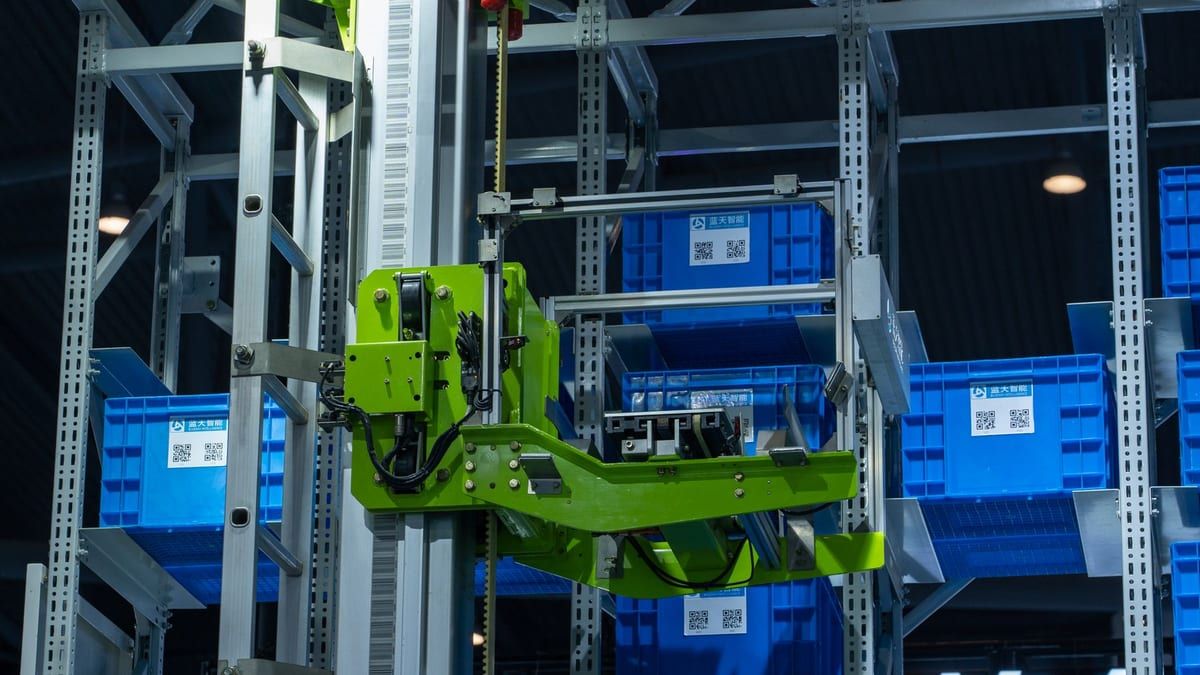
Logistics and ecommerce
- The problem
- Thousands of SKUs, damaged parcels and new packaging arrive every day.
- With Sixth Sense
- The robot keeps picking on familiar items and routes the odd ones to an operator.
-
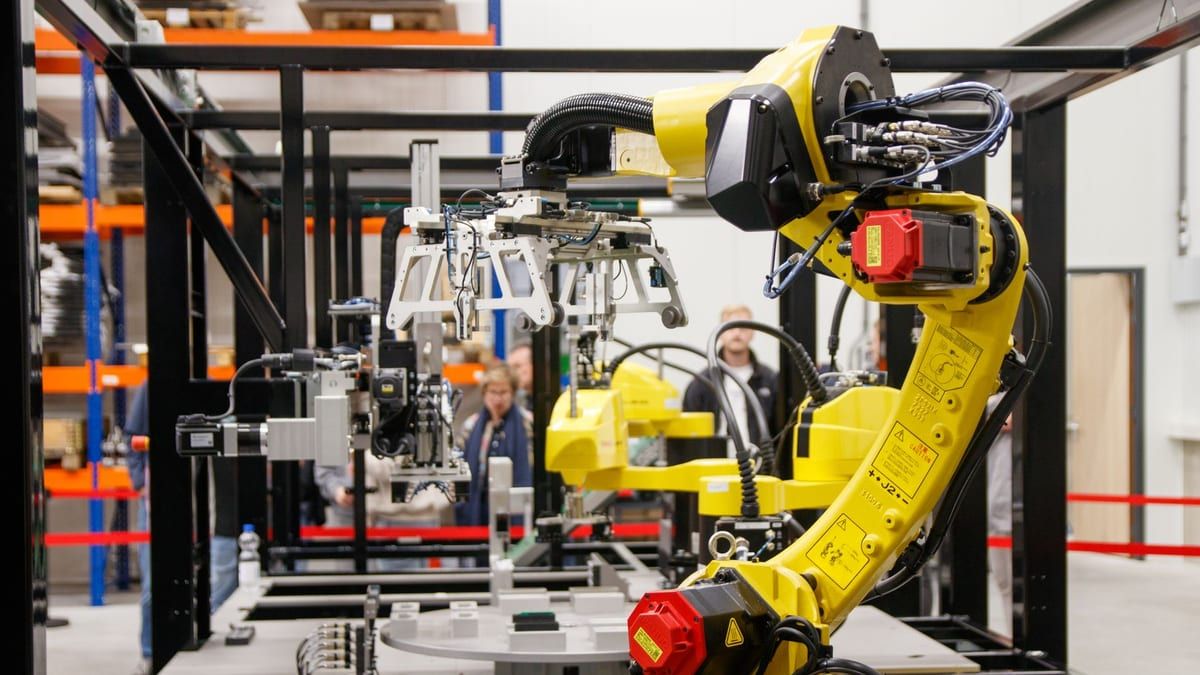
Manufacturing and packaging
- The problem
- Short runs and frequent changeovers make fixed programs expensive to maintain.
- With Sixth Sense
- Rules change in plain language, so a new product does not need a new program.
-
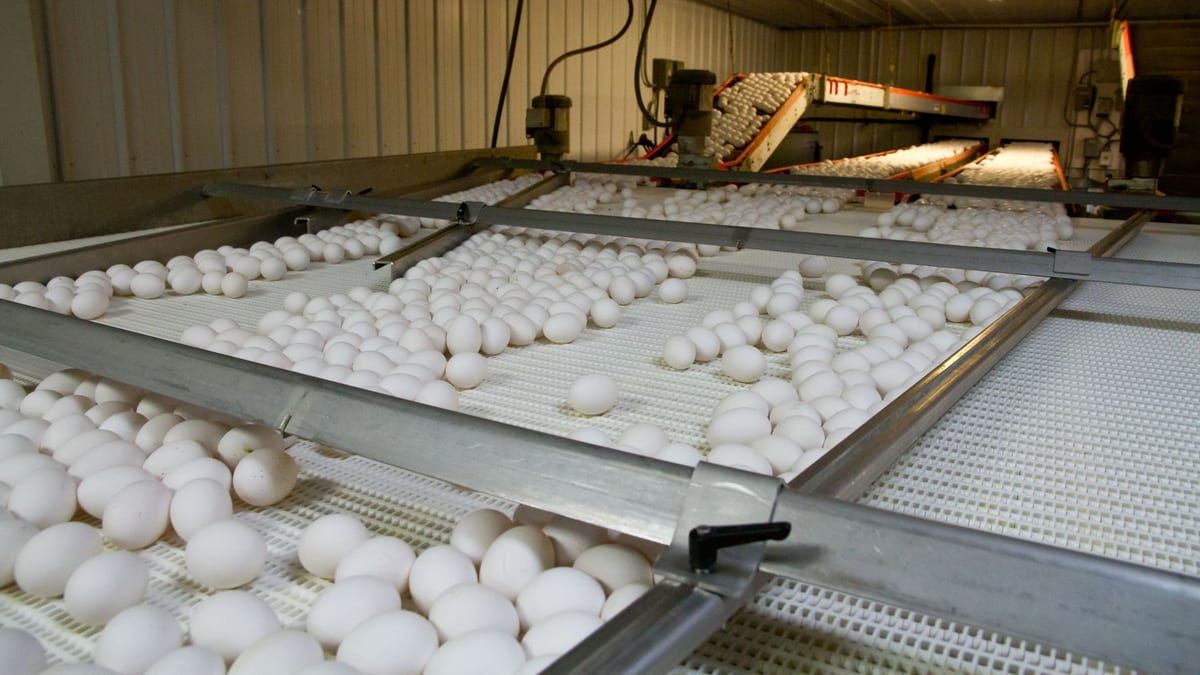
Food and agriculture
- The problem
- Natural products differ in shape, ripeness and quality from one piece to the next.
- With Sixth Sense
- Grading and sorting decisions carry a confidence score, with people deciding the borderline cases.
-
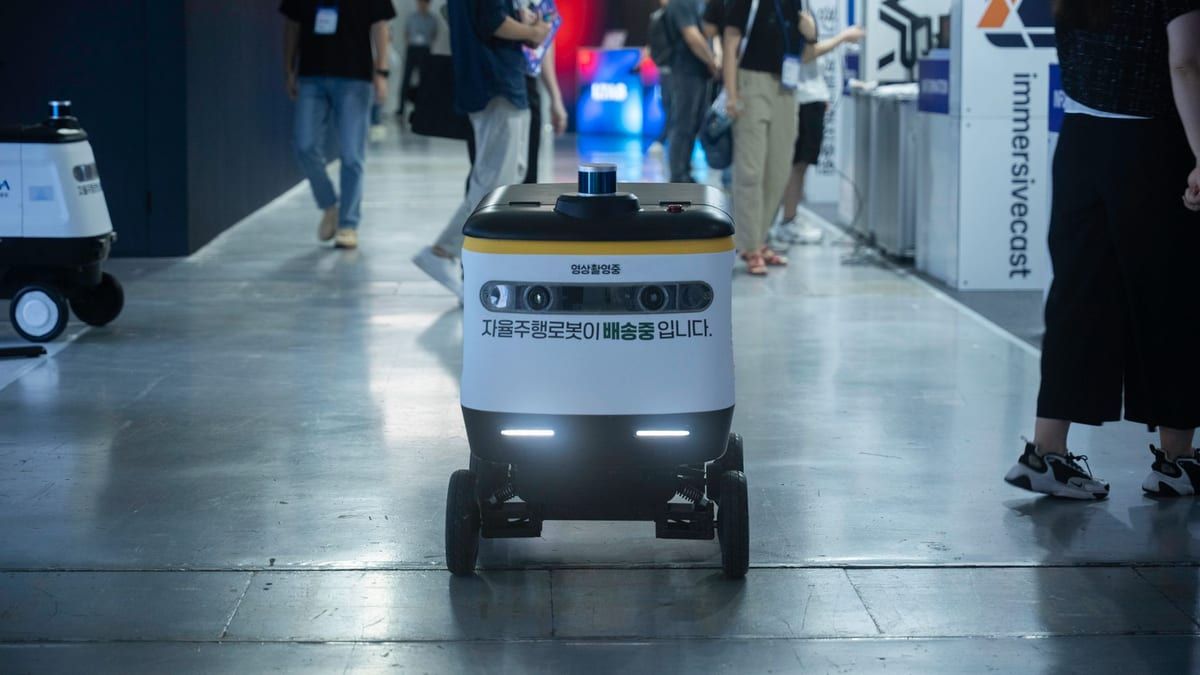
Healthcare and services
- The problem
- Robots meet people and unplanned situations in wards, kitchens and back offices.
- With Sixth Sense
- The robot stops or asks whenever the situation leaves the expected range, and logs why.
Why Sixth Sense
Built for plants, not for demos.
-
On premise by design
The whole stack runs on your site. Images, decisions and logs never leave your network.
-
Works with any robot
Model agnostic and brand agnostic. It connects to the robots and cameras you already own.
-
Every decision auditable
Confidence, action and approver are recorded for each item, ready for inspection.
-
Rules in plain language
Operators change behaviour by writing what should happen. No reprogramming.
-
Humans stay in control
You set the thresholds. Below them, a person decides. Above them, you can still review.
Who it is for
Made for the people who put robots to work.
-
System integrators and robot resellers
Deliver cells that handle variety, and stop losing margin on every exception request.
-
Robot manufacturers entering Europe
Add a decision layer that meets on premise data requirements and audit expectations.
-
Businesses with high variety and low volume
Automate lines that were never worth a custom program.
FAQ
Questions we hear first.
Short answers. Where something is not fixed yet, we say so and define it per pilot.
Is it safe?
Safety rules are deterministic code, and the model can only pick from the actions those rules allow. Below the threshold nothing moves until a person decides. Guards, light curtains and emergency stops stay with the cell. Sixth Sense adds judgment; it does not replace safety hardware.
What data leaves our site?
None by default. The software runs on a box on your premises. Images, decisions and logs stay on your network. Remote support is off unless you switch it on, and its scope is defined per pilot.
Which robots does it work with?
Any robot whose controller accepts commands from an external system. The brands covered by a pilot are confirmed during scoping. ROS 2 support and more brands are on the roadmap.
How long does setup take?
It depends on camera access, controller access and the number of rules. Setup time is defined per pilot, and the pilot plan reserves its first days for it.
Does it replace our integrator?
No. Your integrator keeps the cell, the safety concept and the robot program. Sixth Sense adds the decision layer and works with your integrator. We also work with integrators directly.
How is it priced?
Pilot pricing is defined per pilot. Pricing after the pilot depends on the number of cells and is agreed before the pilot ends. There is no fee per decision.
Pilot program
We are selecting three pilot partners.
In pharma, labs and logistics. One cell, your items, your exceptions. At the end you keep the full decision log, whatever you decide next.
Apply for the pilotWhat a pilot includes
- One robot cell on your site
- Your items and your real exceptions
- Four weeks
- The full decision log at the end
See it decide live.
Bring your items and your exceptions. We will show you what the robot does with them.
Book a demo